

| Release date:2022-07-08 |
Fanny Huang, the President of EOI, was invited to share "Illuminating a Sustainable and Bright Future_Development Trend of Automotive Smart Lighting and Global Layout of Industry Alliance" |
|
Fanny Huang, the President of EOI, was invited to share
"Illuminating a Sustainable and Bright Future_Development Trend of Automotive Smart Lighting and Global Layout of Industry Alliance"
Fanny Huang, the President of EOI, was invited by the "Taiwan LED Lighting Industry Alliance" again to give an online public speech with the theme: "The Development Trend of Automotive Smart Lighting and the Global Layout of the Industry Alliance".
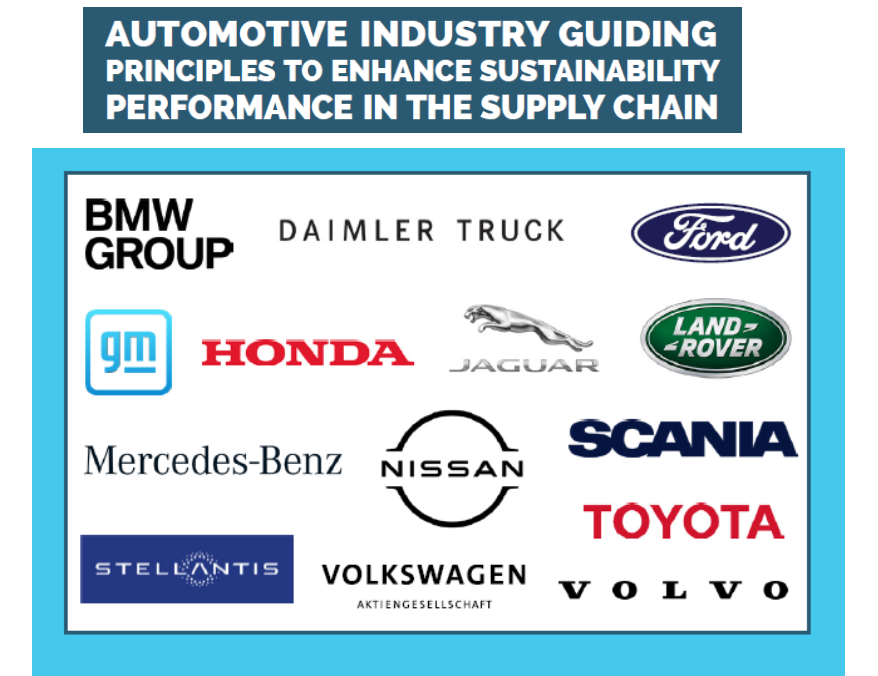
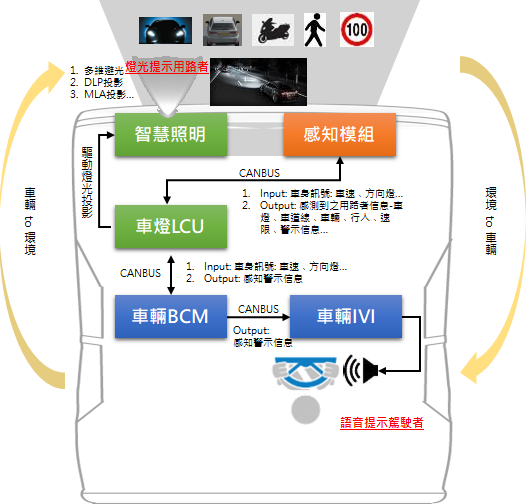
In the past two years or so, the global auto market has been affected by the COVID - 19 epidemic, facing the chain effects of cargo congestion, chip and component shortages, currency inflation ... etc. Bringing unprecedented challenges and dilemmas. ● Development trend of vehicle smart lighting The development trend of automotive smart lighting mainly includes smart headlights, smart auxiliary lights, and smart projection lights. In order to improve the safety and comfortable customer experience of drivers and passengers, and to pay attention to the interaction between the vehicle and the environment, automotive lighting is gradually developing towards Personalization, Communication Display and Driver Assistance. The key technologies of today's car lamp integration include perception recognition and detection technology, smart lighting integration technology, smart projection display and other technologies. The sensor module transmits external information to the car, or projects the in-vehicle information in 3D stereo. On the road environment, it reminds other drivers and pedestrians of the next action of the vehicle, including forwarding, reversing, turning left/right, and opening the door, and other "smart projection functions" to improve driving safety. ●“Net-zero carbon emissions” and the “ESG” wave In view of the global trend of " net-zero emissions ", "ESG" and the EU carbon border adjustment mechanism, net-zero transition is not only an environmental issue, but also an economic issue that is critical to the international competitiveness of various countries' industries. The key to the future development of the automobile industry is whether new energy vehicles can make substantial contributions to CO2 emission reduction? In order to demonstrate their commitment to net-zero carbon emissions, each country has set different goals and expected completion dates. For example, Norway aims to achieve 100% net-zero carbon emissions vehicle sales by 2025. the nearest country. Subsequently, countries such as Denmark, Iceland, Ireland, the Netherlands and Israel have also successively set the goal of achieving 100% net-zero carbon emissions in vehicle sales by 2030. Seeing that the world's leading automotive manufacturers, including TOYOTA, Ford, JAGUAR, NISSAN, VOLVO, Volkswagen, Stellantis , Mercedes-Benz, HONDA , BMW Group and GM, have gradually put forward their ESG indicators requirements for their supply chains, suppliers must Put forward a specific commitment to attach importance to ESG, and put forward ESG plans and goals, otherwise it will seriously affect the original cooperative relationship with the car factory. What can be foreseen in the next ten years is the popularization, promotion, and effectiveness of ESG in the global auto industry. ●Establishing the Taiwan Automotive LED Lighting Industry Alliance EOI has been in the automotive industry for more than 15 years. It has been observed that Taiwanese auto parts manufacturers are mostly small and medium-sized enterprises, with a complete industrial supply chain, with a small amount of diversity and flexible manufacturing advantages; some enterprises do have international competitiveness and enter the international car factory supply chain. potential. However, compared with the leading global automotive lighting manufacturers with a long history, large scale, high market share and high reputation, Taiwan SMEs will obviously continue to be at a disadvantage if they continue to fight alone. Due to the small scale and scattered resources, it is difficult for profit to grow by leaps and bounds. Our idea is that if we can gather like-minded upstream and downstream enterprises in the automotive lighting supply chain to cooperate, we will have the opportunity to carry out cross-domain alliances and integrate sensing systems, LED light source systems, projection systems, display systems, and centers. The upper, middle, and lower reaches of the control and other systems are strategically aligned to achieve the effect of unity. 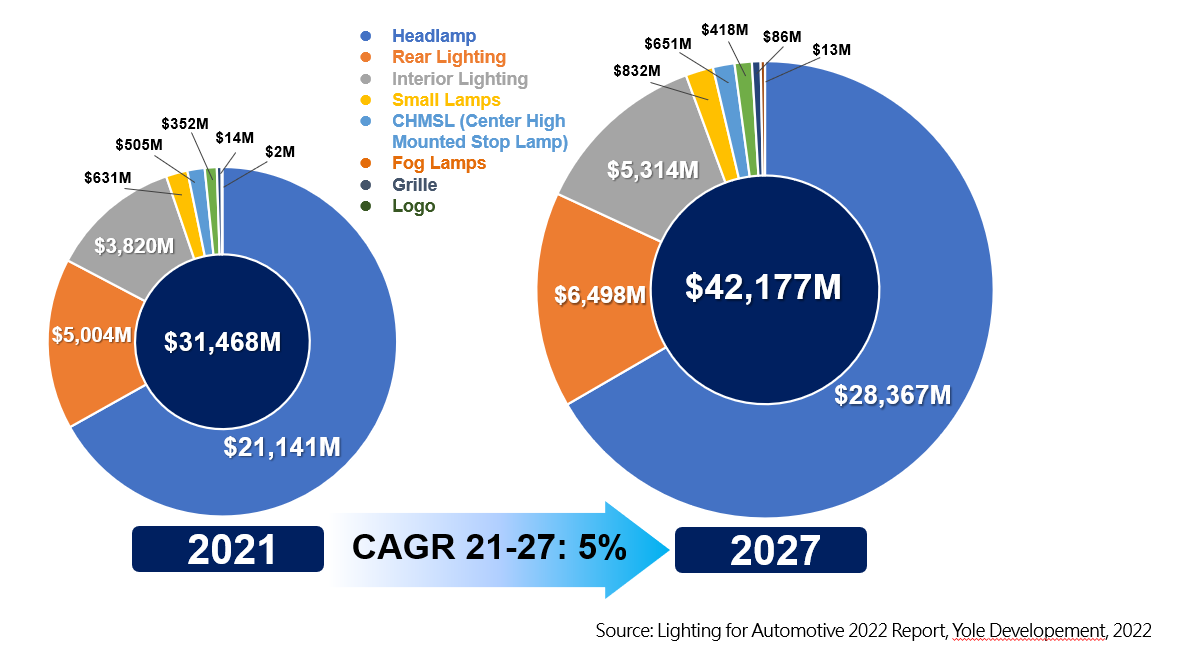
.png)
|
 BACK